

Before you begin
- A Kadoa account.
- For the SDK and API only, a team API key from Settings > General. Only Admins and Owners can create one.
Create your first workflow
Every interface creates the same workflow, and the agent builds each one. It finds the source, proposes a schema, builds and tests the extraction, and shows you a sample to approve.- Dashboard
- SDK & API
- MCP
1
Describe the data you want
Open the Kadoa Dashboard and select Create your first workflow. Describe the task in plain language, for example “Get me all job postings from sandbox.kadoa.com/careers”. Include a source URL when you have one. The agent can also help find the source.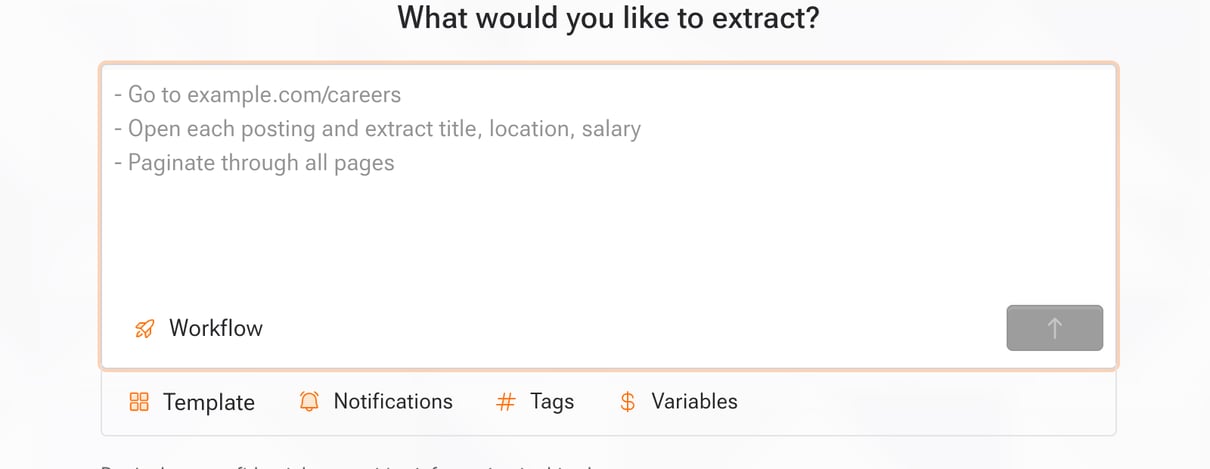 The setup prompt has optional controls:
- Product type
- Workflow extracts a dataset once or on a schedule. Pick it for data that changes a few times a day or less, such as prices you check hourly.
- Real-time watches a website continuously and sends each change as it happens. Select at least one notification channel before you start, unless a selected template provides notifications.
- Templates start you with a reusable prompt, schema, data quality rules, notifications, or frequency.
- Notifications let you choose existing channels or create one without leaving the prompt.
- Tags organize the workflow with team tags.
- Variables insert reusable values into the prompt.
@ for notification channels, # for tags, and $ for variables.2
Watch it build
The agent confirms the source, writes the extraction code, and runs a preview. It narrates each step. The result is a deterministic pipeline. It extracts your data the same way on every run, with no fresh AI guess each time.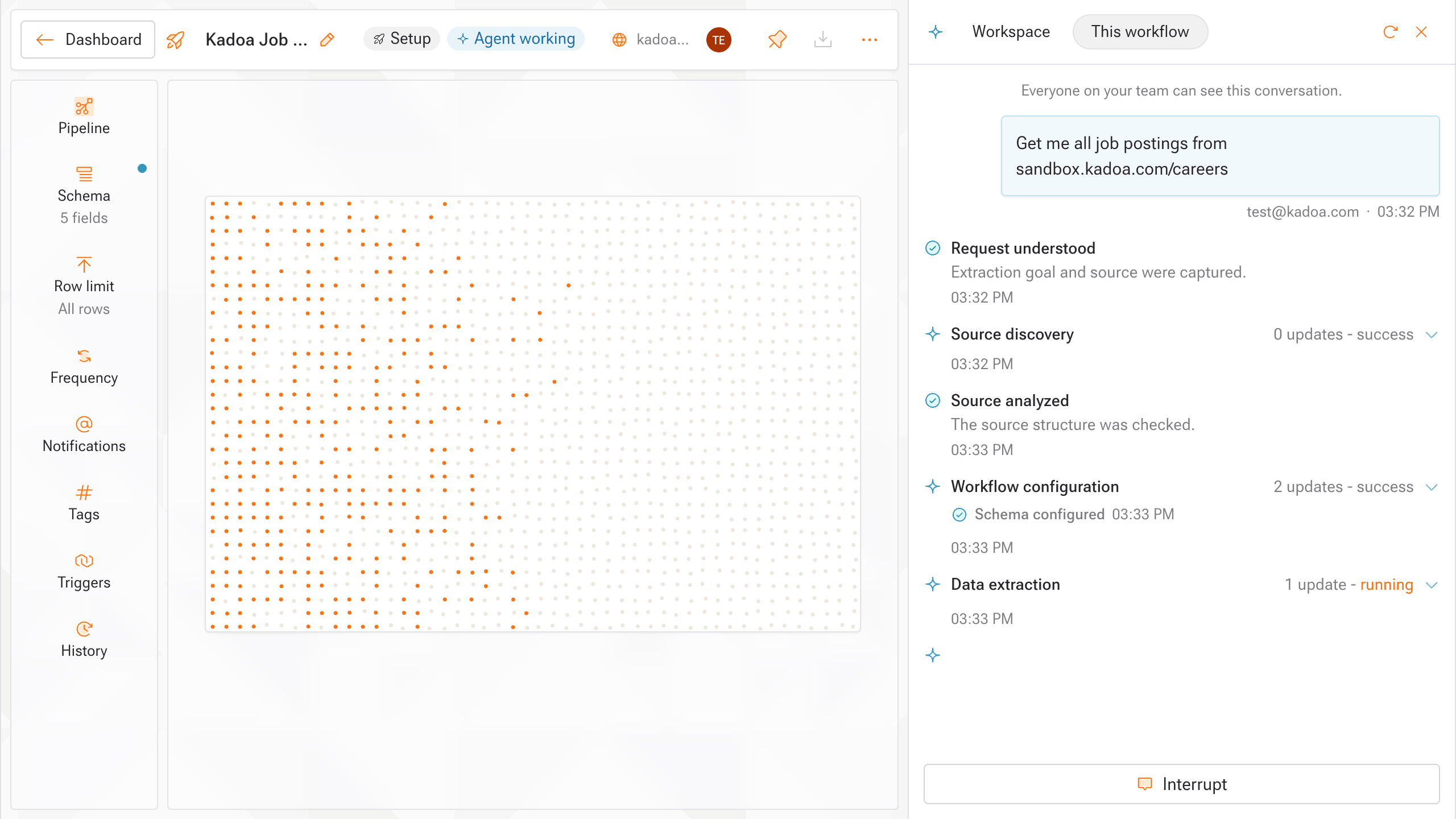
3
Review the sample
Check the preview data. Previews are free.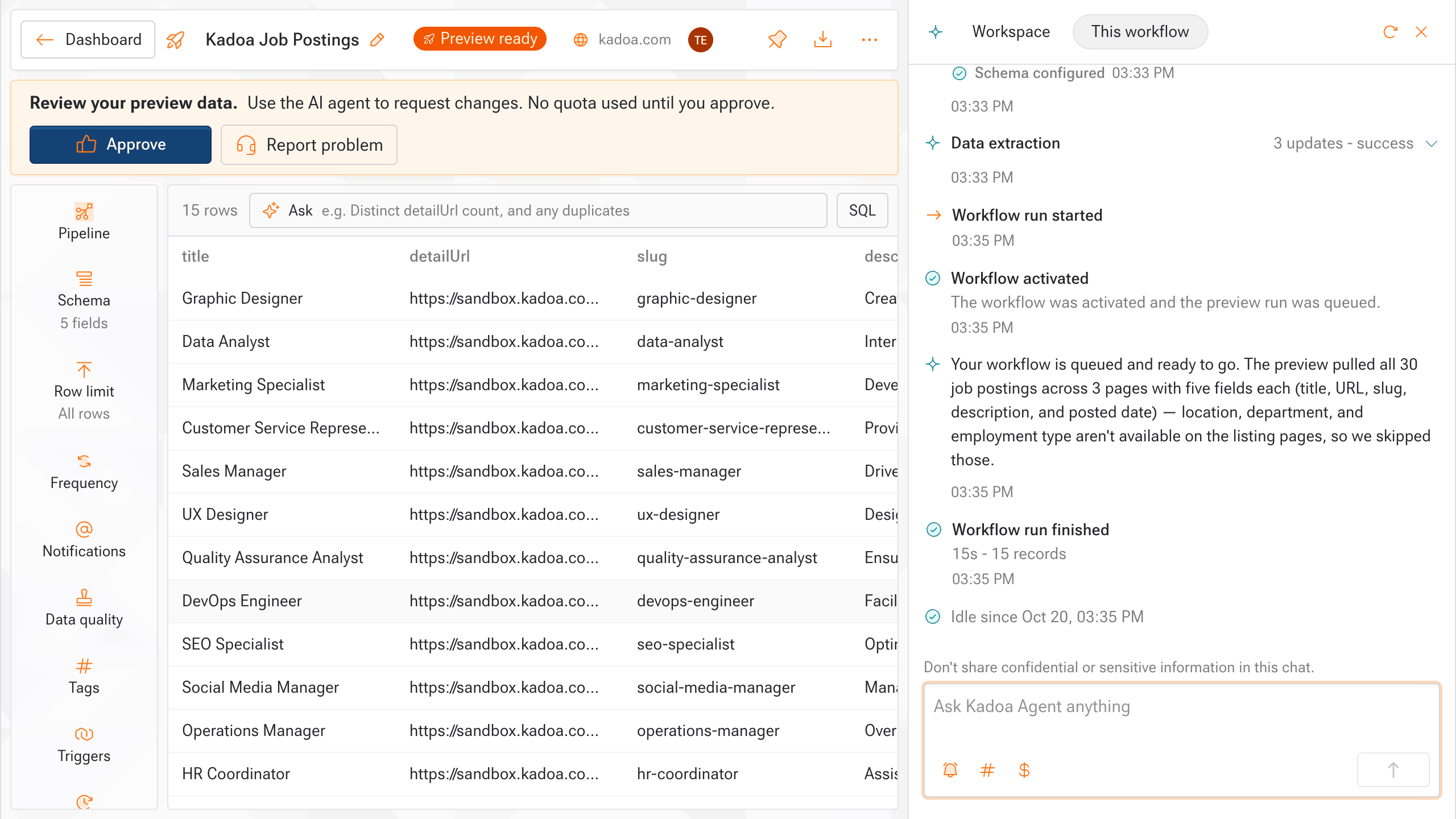
What if it's not right?
What if it's not right?
Tell the agent what to fix, for example “add a salary field” or “pull location from the detail page”. It reruns the preview. Nothing is charged until you approve. To check every run automatically, add data quality rules.
4
Approve and go live
After you approve, the workflow produces the full dataset. Download it, fetch it from code, or deliver every run to Amazon S3, Snowflake, or another tool you use. See Export data and Integrations. Add scheduling, change detection, and notifications any time.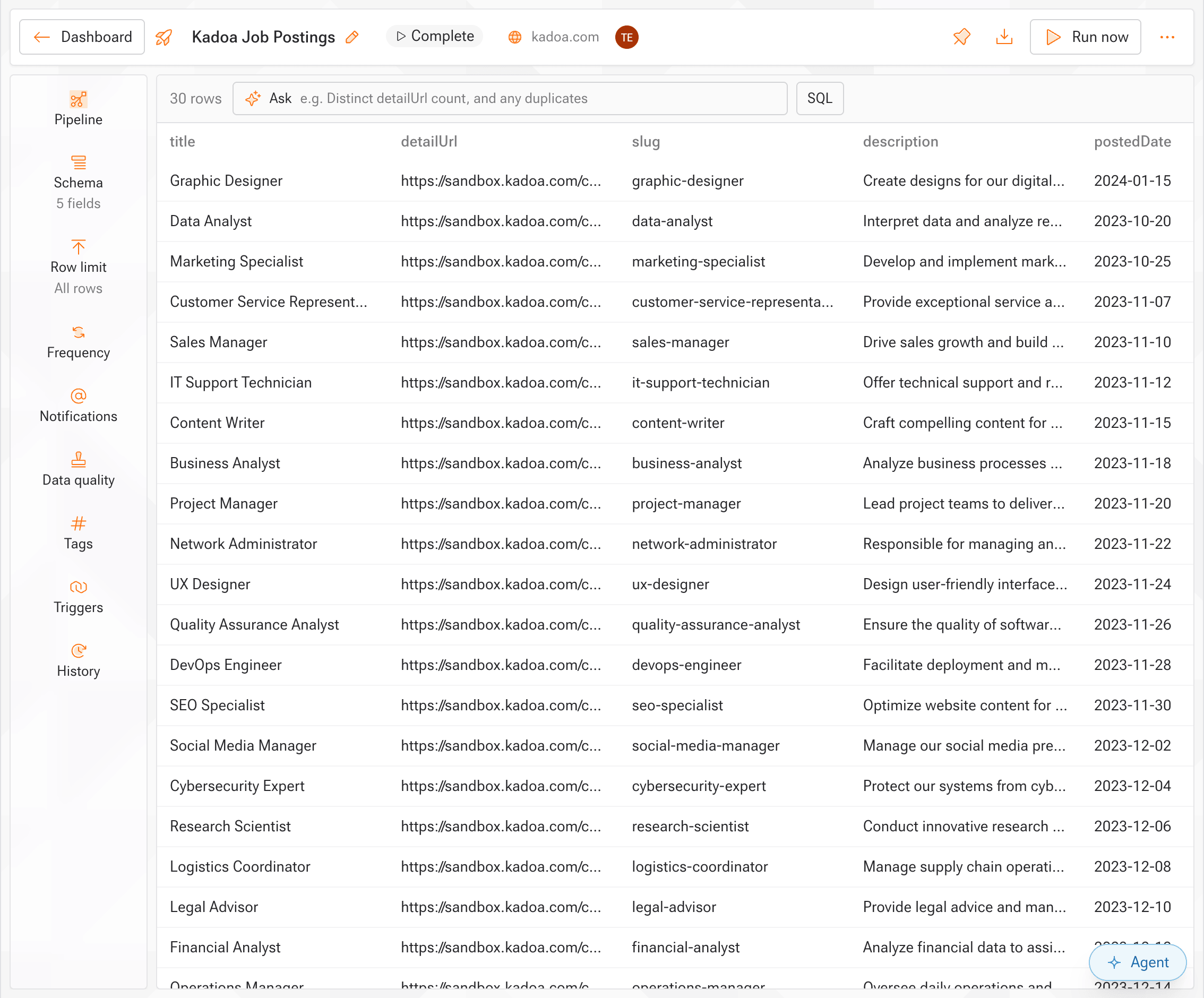
5
Refine anytime
Keep chatting with the agent to change fields, navigation, or the schedule. You can also edit the Schema, Notifications, and Tags panels directly. A template keeps its managed settings read-only until you update or unlink the template.To build several workflows at once or find sources first, use Workspace chat. See Agent.
First-time setup may take longer while Kadoa prepares the workflow. Synchronous SDK calls wait up to 30 minutes by default.
Define the fields
To control the output, name each field yourself.- Dashboard
- SDK & API
- MCP
If you name the fields in your prompt, for example “extract title, price, and rating”, the agent uses exactly those. Otherwise it recommends fields based on the source.To change the fields later, open the workflow’s Schema panel. Select Add field to add one, or edit an existing field. See Schemas for data types and key fields.
Next steps
Schemas
Customize the fields the agent proposed
Scheduling
Run the workflow on a schedule
Notifications
Route events to email, Slack, webhooks, and WebSockets
Export data
Download your data or read it with the SDK and API