

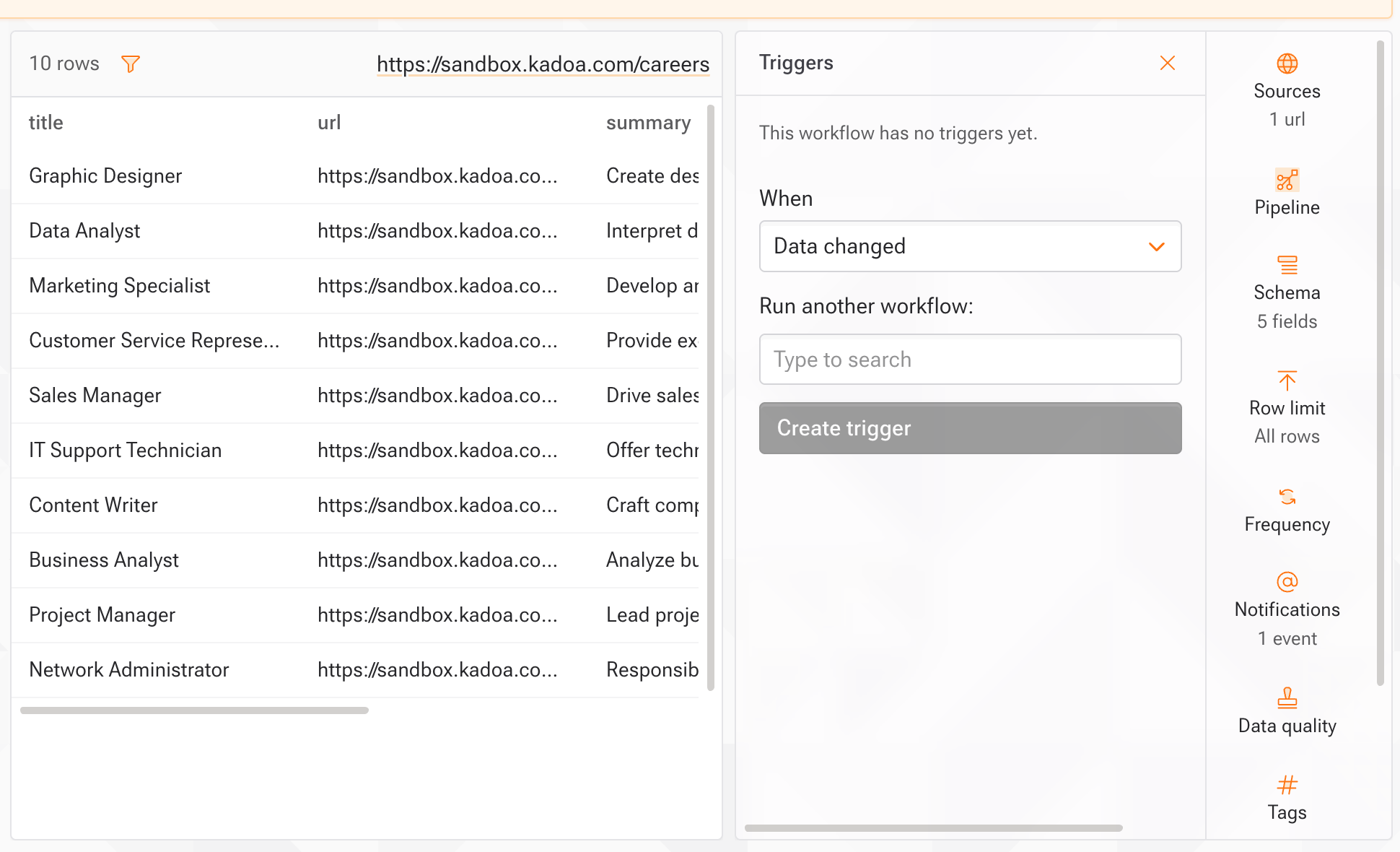
Create a trigger
- Open a workflow → Triggers tab → Add trigger.
- Choose when it fires:
- Data changed — data changed between runs
- Workflow finished — a run completed
- Export completed — an export finished
- Select the workflow to run → Create trigger.
What you’ll see
- Workflows with triggers show a lightning icon and count in the dashboard table.
- The Triggers tab lists outgoing triggers and, below, incoming triggers (workflows that start this one).
Limits
- Up to 5 triggers per workflow.
- A workflow can’t trigger itself.
- Realtime workflows can’t be targets.
- Source and target must share the same team (or the same user for personal workflows).
- A triggered run only starts if the target is active, not already running, and has no open support issue. Events that arrive mid-run are skipped, not queued.
- Chains up to 15 levels deep to prevent loops.